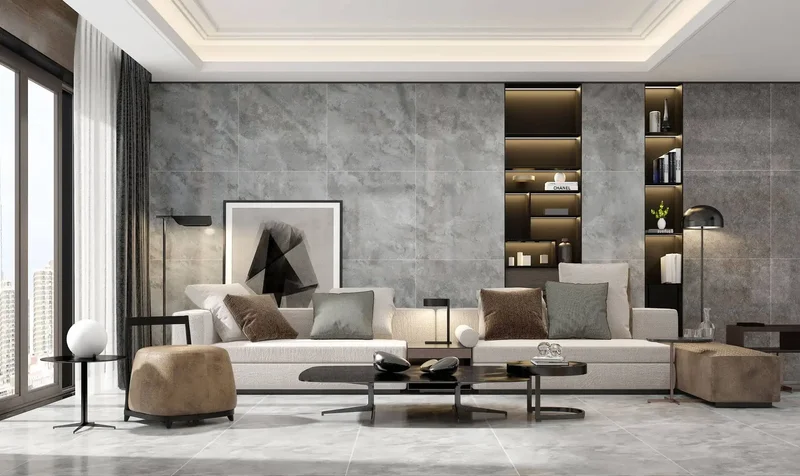
Introduction: The Decision That Defines Your Remodel
If you’re planning a remodel in Venezuela, sooner or later you’ll face this question: porcelain tile or ceramic tile? Both are popular materials for floors and walls, but they have important technical differences that affect durability, maintenance and the final result of your project.
At ReformaT Venezuela, we’ve been installing both materials in Caracas, Valencia, San Diego and throughout Carabobo for over 20 years. We’ve worked with budget ceramics at $10/sq ft and imported porcelain at $80/sq ft. And we can tell you with complete honesty: the most expensive option isn’t always the best for your case.
In this article, we explain without unnecessary technical jargon the real differences between porcelain and ceramic tile, when each one is appropriate, how much they cost in Venezuela in 2026, and how to make the best decision for your home or business.
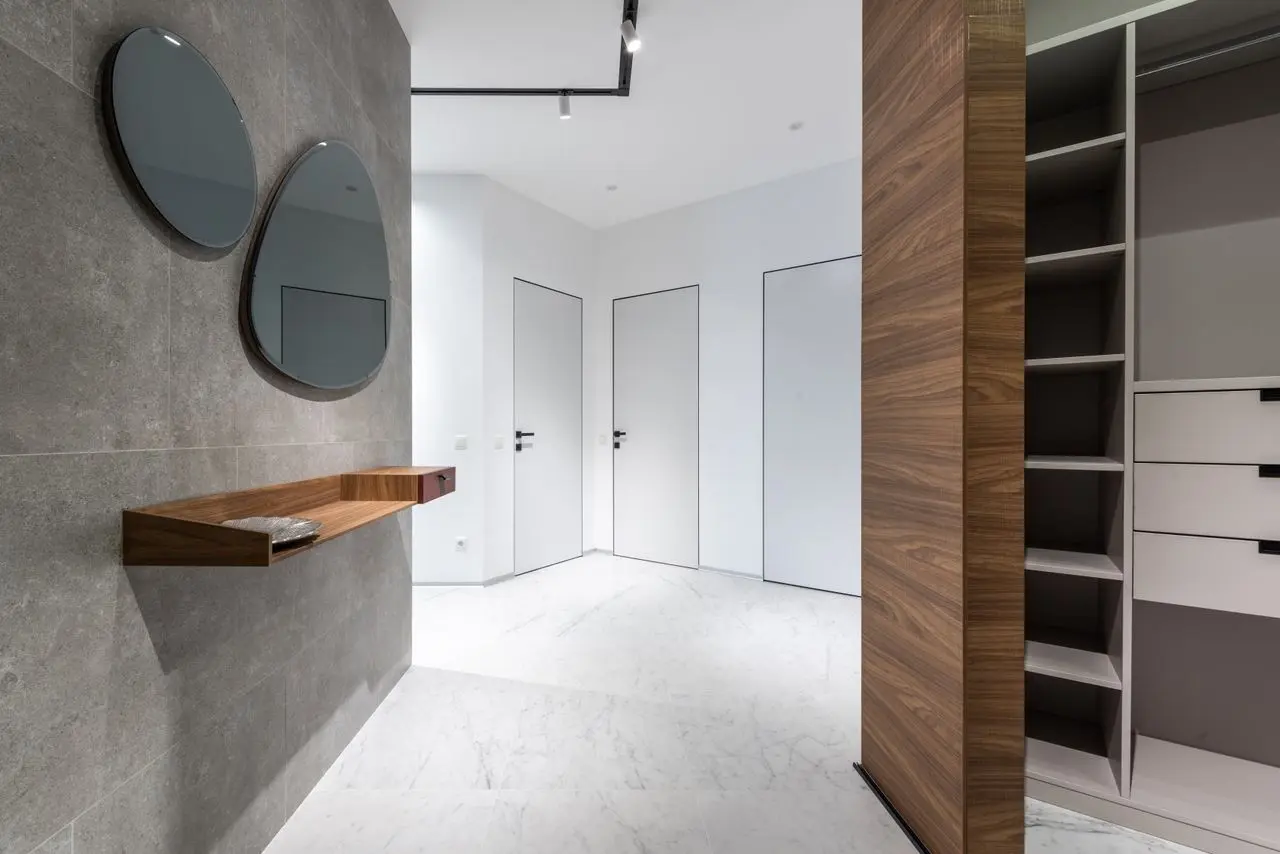
Technical Differences: Porcelain vs Ceramic
Before talking about prices, you need to understand what makes each material different. They’re not the same, even if they may look similar visually.
Composition and Manufacturing
| Characteristic | Ceramic | Porcelain |
|---|---|---|
| Raw material | Red or white clay | Refined clay + feldspar + quartz |
| Firing temperature | 1472-1832°F | 2192-2552°F |
| Water absorption | 3-10% | Less than 0.5% |
| Density | Lower | Higher (more compact) |
| Hardness | Medium | High |
| Wear resistance | Medium | Very high |
In simple terms: Porcelain is fired at higher temperatures, making it denser, harder and more water-resistant. That’s why it’s ideal for high-traffic or high-moisture areas.
Water Absorption: The Key Factor
This is the most important difference. Water absorption determines:
- Frost resistance (doesn’t apply in Venezuela, but moisture does)
- Durability in wet areas (bathrooms, kitchens, pools)
- Ease of cleaning
- Stain resistance
| Material | Absorption | Ideal for bathrooms? | Ideal for outdoors? |
|---|---|---|---|
| Ceramic | 3-10% | ⚠️ Walls only | ❌ Not recommended |
| Porcelain | <0.5% | ✅ Yes, perfect | ✅ Yes, excellent |
Conclusion: For bathrooms, kitchens and wet areas in Venezuela, porcelain is clearly superior.
Price Comparison in Venezuela 2026
Prices vary by brand, format and origin. Here’s a real reference from the Venezuelan market in Caracas, Valencia and San Diego.
Prices Per Square Foot (Material Only)
| Type | Price range | Common origin |
|---|---|---|
| Basic national ceramic | $1 - $1.70/sq ft | Venezuela |
| Premium national ceramic | $1.70 - $2.60/sq ft | Venezuela |
| Imported ceramic | $2.30 - $3.70/sq ft | Colombia, Brazil |
| National porcelain | $2.30 - $3.70/sq ft | Venezuela |
| Standard imported porcelain | $3.70 - $6/sq ft | Spain, Italy, China |
| Premium imported porcelain | $6 - $11/sq ft | Italy, Spain |
Installation Prices (Labor)
| Installation type | Price/sq ft |
|---|---|
| Standard format ceramic (12x12, 16x16) | $0.75 - $1.10/sq ft |
| Large format ceramic (24x24) | $1.10 - $1.50/sq ft |
| Standard format porcelain | $1.10 - $1.50/sq ft |
| Large format porcelain (24x24, 32x32) | $1.50 - $2/sq ft |
| XL format porcelain (48x24, 48x48) | $2 - $2.80/sq ft |
Important: Porcelain installation is more expensive because it requires:
- Specific adhesive (C2 type)
- More precise leveling
- Special tools (leveling system)
- Diamond blade for cuts
When to Choose Ceramic?
Ceramic is not a bad material. It has its advantages and specific uses where it shines.
✅ Advantages of Ceramic
- More economical: Up to 50% cheaper than porcelain
- Easy to cut: Doesn’t require special tools
- Faster installation: Standard adhesive, less precision needed
- Variety of designs: Many formats and finishes
- Ideal for walls: Works perfectly in dry areas
🎯 Recommended Uses for Ceramic
| Space | Recommended? | Why |
|---|---|---|
| Bedroom walls | ✅ Yes | Dry area, no wear |
| Living room walls | ✅ Yes | Aesthetic, economical |
| Bedroom floors | ✅ Yes | Low traffic |
| Living room floors | ⚠️ Depends | Only if traffic is low |
| Kitchens (floor) | ❌ No | Grease, stains, wear |
| Bathrooms (floor) | ❌ No | Constant moisture |
| Outdoors | ❌ No | Temperature changes, rain |
| Pools | ❌ No | Permanent water contact |
💡 Professional Tip
If your budget is limited and you need to renovate several rooms, use ceramic in bedrooms and living rooms, and reserve porcelain for bathrooms, kitchen and high-traffic areas. This optimizes your investment without sacrificing quality where it matters most.
When to Choose Porcelain?
Porcelain is the premium option that offers greater durability and versatility.
✅ Advantages of Porcelain
- Low water absorption: Ideal for wet areas
- High wear resistance: Lasts decades without losing appearance
- Stain resistant: Easy to clean
- Large formats: Fewer joints, more modern look
- Versatility: Imitates wood, marble, stone, cement
- Ideal for outdoors: Doesn’t degrade with sun or rain
- Hypoallergenic: Doesn’t accumulate dust mites or bacteria
❌ Disadvantages of Porcelain
- More expensive: Material and installation
- Requires expert installer: Not just anyone installs it well
- Harder cuts: Needs diamond blade
- Heavier: Makes transport to upper floors more difficult
🎯 Recommended Uses for Porcelain
| Space | Recommended? | Why |
|---|---|---|
| Bathrooms (floor and walls) | ✅ Yes, ideal | Low absorption, hygienic |
| Kitchens (floor and walls) | ✅ Yes, ideal | Resistant to grease and stains |
| Pools | ✅ Yes, ideal | Permanent water contact |
| Outdoors and terraces | ✅ Yes, ideal | Weather resistant |
| High-traffic living rooms | ✅ Yes | Guaranteed durability |
| Commercial spaces and offices | ✅ Yes, ideal | Withstands heavy traffic |
| Bedrooms | ⚠️ Optional | Works, but it’s “overkill” |
💡 Professional Tip
If you’re remodeling your kitchen or bathroom, don’t skimp on porcelain. It’s an investment that pays for itself over the years because you won’t have to replace it for 20-30 years.
Visual Comparison: How to Tell Them Apart?
At first glance they may look the same, but there are tricks to differentiate them.
Tests to Identify the Material
| Test | Ceramic | Porcelain |
|---|---|---|
| Look at the back | Porous red or white clay | Compact, fine material |
| Water drops | Absorbs in seconds | Water stays on surface |
| Weight | Lighter | Heavier (same size) |
| Sound when tapped | Dull sound | Metallic, sharp sound |
| Cut edge | Body looks different | Uniform color throughout thickness |
Types of Porcelain by Finish
| Type | Characteristics | Recommended use |
|---|---|---|
| Polished | Mirror shine, elegant | Living rooms, bedrooms (NOT bathrooms: slippery) |
| Matte | No shine, modern | Bathrooms, kitchens, outdoors |
| Textured | Anti-slip texture | Pools, outdoors, bathrooms |
| Lappato | Semi-polished, soft shine | Living rooms, bedrooms |
| Rectified | Straight edges, minimal joints | Any modern space |
Brands Available in Venezuela
In the Venezuelan market you’ll find national and imported options. These are the most reliable brands we’ve used in our projects in Caracas and Carabobo.
National Brands
| Brand | Type | Quality | Price |
|---|---|---|---|
| Cerámicas Carabobo | Ceramic and porcelain | Medium-High | $$ |
| Porcelanato Venezuela | Porcelain | Medium-High | $$ |
| Sanitarios Maracay | Ceramic | Medium | $ |
Imported Brands
| Brand | Origin | Type | Quality | Price |
|---|---|---|---|---|
| Portobello | Brazil | Porcelain | High | $$$ |
| Lea Ceramica | Italy | Porcelain | Premium | $$$$ |
| Emilceramica | Italy | Porcelain | Premium | $$$$ |
| Pamesa | Spain | Ceramic and porcelain | High | $$$ |
| Roca | Spain | Ceramic | High | $$$ |
Our recommendation: For most projects in Venezuela, good quality national porcelain offers the best value. We only recommend imported for premium projects or when you’re looking for specific designs not available locally.
Common Mistakes When Choosing Tile
After 20 years installing floors and tile, we’ve seen every possible mistake. Avoid them:
❌ Mistake #1: Choosing Only by Price
Cheap turns out expensive. A $0.75/sq ft ceramic tile can:
- Wear out in 3-5 years
- Stain easily
- Break from impacts
- Force you to replace it soon
Solution: Invest in quality where it matters most (bathrooms, kitchens).
❌ Mistake #2: Not Considering Traffic
| Traffic level | Recommended material |
|---|---|
| Low (bedrooms) | Ceramic or porcelain |
| Medium (living rooms, hallways) | Porcelain PEI 3-4 |
| High (commercial, entrances) | Porcelain PEI 4-5 |
| Very high (airports, malls) | Technical porcelain PEI 5 |
PEI is the wear resistance classification. Always ask for this data.
❌ Mistake #3: Ignoring the Friction Coefficient
In bathrooms and wet areas, the floor must be anti-slip. The coefficient of friction (COF) should be:
| Space | Minimum recommended COF |
|---|---|
| Domestic bathrooms | 0.4 |
| Showers | 0.6 |
| Pools | 0.8 |
| Outdoors | 0.6 |
Never use polished porcelain in bathrooms or pools. It’s extremely slippery when wet.
❌ Mistake #4: Not Calculating Waste
Always buy 10-15% extra for:
- Cuts and adjustments
- Pieces that break during installation
- Future replacements (same batch = same shade)
❌ Mistake #5: Installing Without Expansion Joints
Expansion joints are mandatory to prevent the floor from lifting with temperature changes:
- Every 320-430 sq ft indoors
- Every 215-270 sq ft outdoors
- At all wall intersections
Maintenance: Which is Easier to Care For?
Another important factor when choosing: long-term maintenance.
Routine Cleaning
| Material | Recommended product | Frequency |
|---|---|---|
| Ceramic | Neutral detergent + water | Weekly |
| Matte porcelain | Neutral detergent + water | Weekly |
| Polished porcelain | Specific product for polished | Weekly |
Deep Cleaning
| Material | Product | Frequency |
|---|---|---|
| Ceramic | Mild degreaser | Monthly |
| Porcelain | Specific cleaner | Every 3-6 months |
Important: NEVER use strong acids (muriatic, pure bleach) on any type of tile. They damage the glaze and grout.
Estimated Durability
| Material | Estimated lifespan | Factors |
|---|---|---|
| Budget ceramic | 8-12 years | Traffic, maintenance |
| Premium ceramic | 15-20 years | Traffic, maintenance |
| National porcelain | 20-30 years | Practically eternal |
| Imported porcelain | 30+ years | Practically eternal |
Real Case: Kitchen Remodel in Valencia
We’ll tell you about a recent case so you can see how we apply these criteria.
The Project
- Location: 130 sq ft kitchen in San Diego, Carabobo
- Initial condition: 20-year-old ceramic, worn out
- Client budget: $4,500 (tile and labor only)
The Decision
The client wanted Italian porcelain at $7.40/sq ft, but that consumed 60% of the budget just on material. We proposed:
| Option | Material | Price/sq ft | Total cost |
|---|---|---|---|
| A | Italian porcelain | $7.40 | $1,920 |
| B | Premium national porcelain | $3.25 | $840 |
| C | Premium ceramic | $2 | $528 |
The Result
We chose Option B: high-quality national porcelain in 24x24 format, cement gray color, matte finish.
Advantages obtained:
- ✅ $1,080 savings vs. imported
- ✅ Same durability (20-30 years)
- ✅ Modern, current aesthetic
- ✅ Complete budget for cabinets and countertop
Lesson: The most expensive option isn’t always the best. A well-chosen national porcelain can deliver spectacular results.
Summary Table: Which to Choose?
To eliminate any doubts, here’s a definitive summary table.
| Criteria | Ceramic | Porcelain | Winner |
|---|---|---|---|
| Material price | $ | $$$ | Ceramic |
| Installation price | $ | $$ | Ceramic |
| Durability | Medium | Very high | Porcelain |
| Water resistance | Medium | Excellent | Porcelain |
| Stain resistance | Medium | Excellent | Porcelain |
| Design variety | High | Very high | Tie |
| Installation ease | High | Medium | Ceramic |
| Maintenance | Medium | Low | Porcelain |
| Bathrooms | ❌ | ✅ | Porcelain |
| Kitchens | ❌ | ✅ | Porcelain |
| Bedrooms | ✅ | ✅ | Tie |
| Outdoors | ❌ | ✅ | Porcelain |
| Interior walls | ✅ | ✅ | Tie |
Our Final Recommendation
- If your budget is limited: Ceramic on walls and bedrooms, porcelain in bathrooms and kitchen.
- If you seek maximum durability: Porcelain throughout the house.
- If you’ll remodel in 5-10 years: Ceramic is sufficient.
- If it’s your forever home: Invest in porcelain.
Frequently Asked Questions
Can I install porcelain over existing ceramic?
Yes, it’s possible, but with conditions:
- The base ceramic must be firm and well-adhered
- You lose height (0.4-0.6 inches with adhesive)
- You must use specific adhesive (C2)
- Check that doors don’t rub with the new level
Not recommended if:
- The ceramic has loose pieces
- There’s moisture
- Available height is limited
How long does a porcelain floor last?
Quality porcelain properly installed lasts 20-30 years or more. There are cases of Italian porcelain over 50 years old in perfect condition.
Is porcelain cold to the touch?
Yes, it’s colder than ceramic or wood. Solutions:
- Install radiant heating under the floor (premium option)
- Use rugs in rest areas
- In Venezuela, porcelain’s “coldness” is pleasant due to the warm climate
Can I use the same material on floor and wall?
Yes, and it’s a 2026 trend. It’s called “visual continuity” and makes spaces look larger and more modern. Use the same porcelain on bathroom floor and walls for a spectacular effect.
What is rectified porcelain?
It’s porcelain whose edges are cut with millimeter precision, allowing minimal 1/16 inch joints. It gives a cleaner, more modern look but requires very precise installation.
Conclusion: The Right Choice Depends on Your Case
There’s no universally better material. Ceramic and porcelain have their specific uses, and the right decision depends on:
- Available budget
- Space to tile (bathroom, kitchen, bedroom, outdoor)
- Expected traffic
- Expected durability
- Desired aesthetic
ReformaT Venezuela’s Golden Rule
Invest in porcelain where it matters most (bathrooms, kitchens, outdoors) and use quality ceramic where wear is lower (walls, bedrooms).
This optimizes your budget without sacrificing durability where you really need it.
Need Professional Advice?
At ReformaT Venezuela we help you choose the perfect material for your project in Caracas, Valencia, San Diego or Carabobo. We offer:
✅ Free consultation on materials and formats
✅ Detailed quote with material + installation
✅ Professional installation with 2-year warranty
✅ Home samples so you can see the material in your space
✅ Access to special prices with our suppliers
📞 Call us at 0422-799-7043 or write to contacto@reformat-venezuela.online
Complete coverage:
- Caracas: Chacao, Baruta, El Hatillo, Sucre, Libertador, all parishes
- Carabobo: Valencia, San Diego, Naguanagua, Guacara, Los Guayos
Tell us about your project and we’ll recommend the best material combination for your budget. Because your remodel deserves quality. And you deserve clarity.
📚 Related Articles
- Kitchen Remodel Cost Guide — Updated pricing for your kitchen project
- Bathroom Remodel Guide in Carabobo — Complete guide for bathroom renovations
Need help choosing materials? Check our flooring & cladding services →