Introduction: Why 2026 Is the Perfect Year to Renovate Your Kitchen
The kitchen has stopped being that purely functional space where you only cook. Today, it’s the heart of the home, the place where the family gathers, where friends are entertained, where you work and even where children do their homework.
At ReformaT Venezuela, we’ve been transforming kitchens in Valencia and San Diego for over 20 years, and we’ve seen how trends have evolved. But 2026 brings truly significant changes that combine technology, sustainability and timeless design.
In this article we’re not just going to list trends. We’ll explain why they’re important, how to implement them in your remodel, and how much you could invest in each one. Because we know remodeling the kitchen is an important decision, and we want you to make the best informed decision.
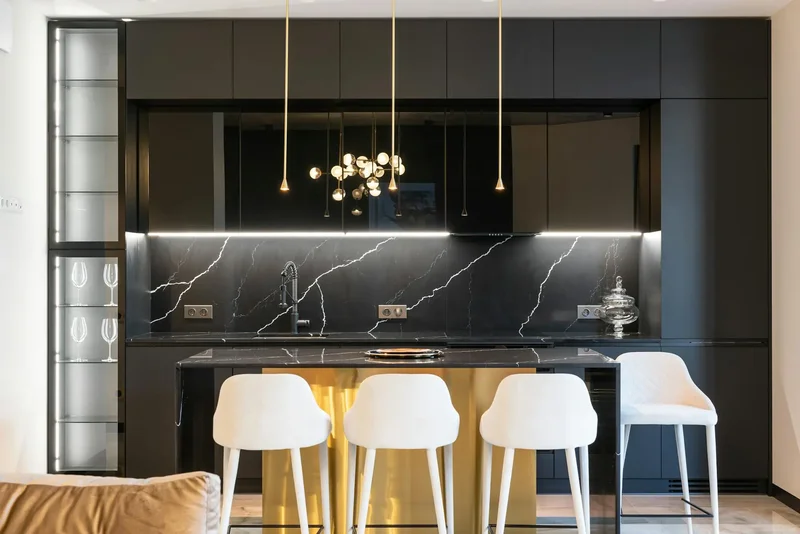
1. Smart Kitchens: Home Automation That Actually Works
What Exactly Does a Smart Kitchen Mean?
When we talk about smart kitchens, we don’t just mean having a speaker that plays music. We’re talking about an integrated ecosystem where every element works to make your life easier, safer and more efficient.
Practical examples we’re already installing:
-
Motion sensor faucets: Just bring your hands close and water flows. Perfect when your hands are full of flour or fish. Plus, they save up to 30% water because they close automatically.
-
Ovens controlled from your phone: Left work late? Turn on the oven from the office so when you arrive, it’s preheated and ready. Brands like Bosch, Siemens and Samsung already include this function in their mid and high ranges.
-
Refrigerators with interior cameras: From the supermarket you can see what you’re missing without having to call home. Some even alert you when a product is about to expire.
-
Adaptive lighting: In the morning, cool white light that wakes you up. At night, warm light that relaxes. All automatic according to time of day.
How Much Does It Cost to Implement Home Automation in Your Kitchen?
Here comes the important part. Many people think home automation is only for the rich, but reality is different:
| Element | Price Range | Return on Investment |
|---|---|---|
| Sensor faucet | $150 - $400 | 30% water savings |
| Smart LED lighting | $200 - $600 | 80% electricity savings |
| Smart outlets | $30 - $80 each | Total control |
| Connected oven | $800 - $2,500 | Convenience + efficiency |
Our advice: You don’t have to do everything at once. Start with LED lighting and faucets. They’re the investments that pay off fastest.
2. Sustainable Materials: Beauty That Cares for the Planet
The Change You’re Looking For (Without Sacrificing Aesthetics)
Years ago, “sustainable” meant “ugly” or “not durable”. That changed. Today ecological materials are more resistant, more beautiful and healthier than traditional alternatives.
The 4 sustainable materials we’re using most in 2026:
A. Recycled Quartz Countertops
Recycled quartz is manufactured with remnants from other countertops, recycled glass and low-emission resins.
Real advantages:
- Doesn’t need sealing (unlike granite or marble)
- Resistant to scratches, stains and heat
- Available in over 100 colors and textures
- Price: $80-$150 per square foot installed
Disadvantages:
- Not 100% natural (although 70-90% recycled)
- Can be damaged by extreme direct heat (always use trivets)
B. FSC Certified Wood for Cabinets
FSC (Forest Stewardship Council) wood guarantees it comes from responsibly managed forests.
Why we love it:
- Each board is unique, with unrepeatable natural grain
- Can be sanded and varnished every 10-15 years, completely renewing it
- Brings immediate warmth to the space
- Price: $200-$500 per linear foot of cabinet
Necessary care:
- Cleaning with specific wood products
- Avoid prolonged moisture
- Apply oil or varnish every 2-3 years
C. Cork or Bamboo Flooring
Forget cold ceramic. Cork and bamboo are warm, quiet and renewable.
Cork:
- Harvested without cutting down the tree (every 9 years)
- Thermally and acoustically insulating
- Naturally anti-slip
- Price: $5-$12 per square foot
Bamboo:
- Grows 30 times faster than traditional wood
- Harder than oak
- Moisture resistant
- Price: $6-$15 per square foot
D. Zero-VOC Paints (Volatile Organic Compounds)
Traditional paints release toxic gases for months. Zero-VOC paints are safe from day one.
Benefits:
- No strong odor
- Safe for children and pets
- Available in any color
- Price: 10-20% more expensive than traditional, but worth it
3. Multifunctional Islands: Your Kitchen’s Operations Center
Why the Island Is No Longer Optional
If you have space (minimum 10x10 feet kitchen), a well-designed island multiplies your space’s functionality. It’s not just “pretty”, it’s extremely practical.
Functions a modern island can fulfill:
- Prep zone: Standard height (36 inches) with resistant countertop
- Breakfast bar: Bar height (42-44 inches) with stools
- Hidden storage: Deep drawers for pots, vertical pantry
- Integrated appliances: Dishwasher, microwave oven, wine cooler
- Charging zone: USB outlets, wireless charging for phones
- Secondary sink: Perfect for two people to cook without getting in each other’s way
Minimum Dimensions You Need
This is where many people make mistakes. A poorly dimensioned island gets in the way of the kitchen instead of improving it.
| Function | Minimum Width | Minimum Depth | Circulation Space |
|---|---|---|---|
| Prep only | 48 inches | 24 inches | 36 inches around |
| With sink | 60 inches | 36 inches | 40 inches around |
| With breakfast bar | 72 inches | 48 inches | 44 inches around |
| With appliances | 80 inches | 48 inches | 48 inches around |
Real example: In a 13x10 foot kitchen, we installed a 72x36 inch island with:
- Single-bowl sink on the left
- Prep zone in the center (24 inches free)
- Bar with 3 stools on the right
- Deep drawers underneath for storage
Result: The family can have 3 people cooking simultaneously without colliding.
4. Scene Lighting: Beyond “Turning on the Light”
Lighting That Transforms Your Kitchen at Different Moments
Good lighting isn’t “putting a bulb on the ceiling”. It’s creating layers of light that adapt to what you’re doing.
The 4 layers of lighting every premium kitchen needs:
Layer 1: General (Ambient) Lighting
- What it is: Base light that illuminates entire kitchen uniformly
- Where it goes: Recessed in ceiling (LED downlights)
- Temperature: 3000-4000K (neutral white)
- Intensity: 300-400 lux
- Cost: $150-$400 depending on number of points
Layer 2: Task Lighting
- What it is: Light directed to specific work zones
- Where it goes: Under upper cabinets, over island, over sink
- Type: LED strips or directional spotlights
- Intensity: 500-750 lux (brighter than general)
- Cost: $200-$600
Important: This light should be maximum 2 inches from front edge of cabinet to not cast shadows while cutting.
Layer 3: Decorative Lighting
- What it is: Light that creates ambiance and highlights elements
- Where it goes: Inside glass cabinets, under island (floating effect), over artwork
- Type: Dimmable RGB LED strips
- Temperature: 2700K (warm) or colors according to mood
- Cost: $100-$300
Layer 4: Maximized Natural Lighting
- What it is: Maximizing daylight
- How: Large windows, skylights, strategic mirrors, light colors on walls
- Cost: Variable (but cheapest in the long run)
Practical usage example:
- Morning (6-9am): General light at 80% + natural light. Wakes you up.
- Midday (12-2pm): Only natural light + task light when cooking.
- Night (7-11pm): General light at 40% + warm decorative light. Relaxing.
Smart Systems We Recommend
- Philips Hue: Most complete, voice control (Alexa/Google), preset scenes. Investment: $300-$800.
- IKEA Tradfri: Budget option, works well, fewer functions. Investment: $150-$400.
- Lutron Caseta: Most professional, electrical installation (not just bulbs). Investment: $500-$1,200.
5. Warm Colors and Textures: Goodbye Cold White
The Color Revolution in Modern Kitchens
For 20 years, bright white dominated kitchens. It was “safe”, “clean”, “modern”. But it was also cold, impersonal and boring.
In 2026, warm colors are taking over. And we’re not talking about painting the entire kitchen red. We’re talking about sophisticated palettes that create welcoming environments.
The Most Popular Color Palettes in 2026
Palette 1: Earth and Wood (Most Popular)
- Cabinets: Natural oak or light walnut wood
- Countertops: Beige quartz or sand granite
- Walls: Off-white or very soft beige
- Accents: Matte black in faucets and handles
- Ambiance: Warm, natural, timeless
Why it works: Wood brings immediate warmth. Matte black gives modern contrast. Easy to maintain and never goes out of style.
Palette 2: Soft Greens (Emerging Trend)
- Cabinets: Sage green or eucalyptus green (matte, not glossy)
- Countertops: White marble with gray veining
- Walls: Warm white
- Accents: Gold or brass in faucets
- Ambiance: Fresh, natural, relaxing
Why it works: Green connects with nature, reduces stress and combines perfectly with plants.
Palette 3: Deep Blues (Dramatic Option)
- Cabinets: Navy blue or petroleum blue (only lower cabinets, uppers in white)
- Countertops: White or light gray quartz
- Walls: Pure white
- Accents: Gold or copper
- Ambiance: Elegant, sophisticated, with character
Why it works: Dark blue is dramatic without being overwhelming if used only on lower cabinets. Contrast with white balances it.
Textures That Make the Difference
It’s not just color. Texture defines how your kitchen feels:
- Wood with visible grain: Brings character and warmth
- Polished natural stone: Luxury and durability
- Matte microcement: Minimalist modernity
- Rattan or wicker: Bohemian touch on pantry doors
- Leather on stools: Comfort and sophistication
Winning combination example:
- Lower cabinets in oak wood with visible grain
- Upper cabinets in matte white
- White quartz countertop with gray veining
- Cognac brown leather stools
- Light wood flooring
- Green plants to bring life
Conclusion: How to Implement These Trends in Your Remodel
You Don’t Have to Do Everything at Once
Remodeling a kitchen is an important investment. You don’t need to implement all 5 trends at once. Here we give you a phased plan:
Phase 1 (Essential - 60% of budget):
- Functional layout with island if possible
- Durable materials in countertops and cabinets
- Basic task and general lighting
Phase 2 (Comfort - 25% of budget):
- Basic home automation (sensor faucet, dimmable lighting)
- Efficient appliances
- Warm color finishes
Phase 3 (Luxury - 15% of budget):
- Complete smart lighting system
- Premium materials (marble, noble wood)
- Decorative details and textures
How Much Does a Kitchen Remodel Cost in 2026?
In Valencia and San Diego, Carabobo, these are the real ranges:
| Remodel Type | Square Feet | Investment | Time |
|---|---|---|---|
| Basic | 86-108 sq ft | $5,000 - $8,000 | 2-3 weeks |
| Mid-range | 108-161 sq ft | $8,000 - $15,000 | 3-5 weeks |
| Premium | 161-269 sq ft | $15,000 - $30,000 | 5-8 weeks |
| Luxury | 269+ sq ft | $30,000+ | 8-12 weeks |
Important: These prices include professional labor, medium-high quality materials, and 2-year warranty.
Why Choose ReformaT Venezuela?
- 20+ years transforming kitchens in Valencia and San Diego
- Over 500 kitchens remodeled with satisfied clients
- Real 2-year warranty on all our work
- Closed budget without surprises or hidden costs
- Financing available to make your remodel more accessible
- Personalized advice from design to installation
Your Next Step
Don’t let your obsolete kitchen continue limiting your daily life. Imagine waking up every morning in a kitchen that:
- Makes your life easier with smart technology
- Is beautiful and welcoming for you and your family
- Increases your property value
- Is efficient and sustainable
That’s what we do at ReformaT Venezuela.
📞 Call us at 0422-799-7043 or write to contacto@reformat-venezuela.online to schedule a free consultation at your home. No obligation, no pressure. Just good ideas to transform your kitchen.
📚 Related Articles
- Kitchen Remodel Cost in Caracas & Valencia — Real prices for your dream kitchen
- Porcelain vs Ceramic Tile Guide — Best materials for countertops and backsplashes
Want a trendy kitchen? Design your kitchen with us →